
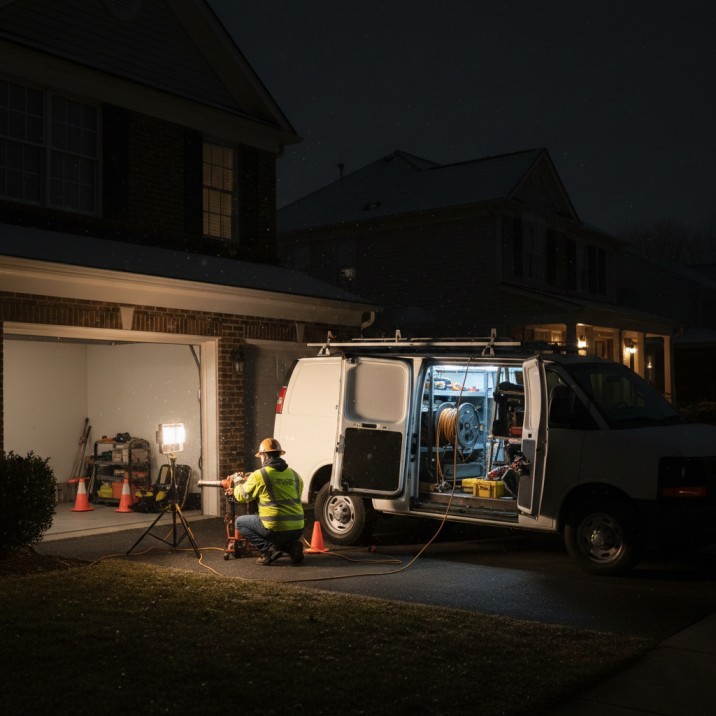
Emergency Garage Door Services in New Jersey
24/7 • Same-Day Availability • Licensed & Insured
An emergency garage door repair addresses sudden failures that stop safe operation, block vehicle access, or leave a home exposed.
Sudden garage door failures can block your car, leave your home exposed, or create a serious safety risk. Kraus Garage Doors provides emergency repairs across New Jersey day and night — when the situation can’t wait.
When Your Garage Door Fails, You Need Fast, Safe Help
Emergency garage door repair involves sudden, unsafe failures that require immediate professional attention.
Emergency garage door repair deals with sudden failures that stop the door from opening or closing safely, block access to your vehicle, or leave the home vulnerable. Springs break while you’re heading to work. Openers die late at night. Doors jam halfway up during a storm.
If the door is unsafe or stuck, don’t force it. Get a trained technician to prevent further damage and reduce injury risk.
Need service now?
Use our contact page or call for same-day emergency help. For non-emergency repairs, start with our main service page: Garage Door Repair in NJ.
What Causes Emergency Garage Door Failures?
Most emergency garage door failures are caused by worn springs, snapped cables, misaligned tracks, or sudden opener malfunctions.
These issues often appear suddenly and can escalate if the system is forced to operate while damaged. Because the door’s components work together, continuing to run a compromised system frequently causes additional damage.
- Broken springs (torsion/extension) reaching end-of-life
- Snapped cables causing the door to lift unevenly or jam
- Track misalignment from impact, settling, or storms
- Opener failure from gear wear, sensors, or board/electrical issues
Related services: Spring replacement, cable repair, opener repair.
What Should Homeowners Do Immediately When a Garage Door Fails?
Stop using the door, keep people clear, and contact a professional emergency garage door service.
Trying to force a stuck door open or closed is risky. A malfunctioning door may have springs under extreme tension, cables that can snap without warning, tracks that no longer support the door evenly, or electrical issues inside the opener.
Safety first
DIY work on high-tension components causes injuries every year. If the door is stuck open, secure the space if possible, then contact a technician.
Why Are Broken Garage Door Springs an Emergency?
Broken garage door springs make the door dangerously heavy and unstable, increasing the risk of injury and equipment damage.
Torsion and extension springs carry most of the door’s weight (often 150–400 pounds). Once a spring breaks, the door becomes extremely difficult to lift and nearly impossible to control safely.
Based on internal service records, spring failures account for over half of emergency garage door calls.
- Burn out the opener motor
- Bend or crack door panels
- Damage tracks and mounting hardware
- Cause the door to fall suddenly
For safe replacement and balancing: Garage Door Spring Replacement in NJ.
What Happens When a Garage Door Comes Off Its Track?
A garage door off its track is unstable and can fall without warning, making professional repair necessary.
This can happen after a vehicle impact, worn rollers, loose cables, or track movement from settling or storms. When the door lifts unevenly, the remaining track connection can fail under load.
Do not move a door that’s partially off-track
The weight distribution is uneven, and collapse risk is high. A proper repair includes track realignment, roller replacement, correcting cable tension, and load testing.
Helpful related service pages: roller replacement and cable repair.
What Should You Do If Your Garage Door Opener Stops Working?
Basic checks are safe, but recurring opener failures require professional diagnosis.
Openers can fail suddenly due to worn gears, sensor problems, logic board damage, or electrical issues. Common symptoms include humming without movement, stopping mid-cycle, or not responding at all.
- Check the breaker and outlet
- Test the wall button and remote separately
- Clean the safety sensor lenses
- Make sure nothing is blocking the door
If the opener grinds, smells hot, stops repeatedly, or shows visible damage, it’s time to call a technician. See: Garage Door Opener Repair NJ or Opener Installation.
Is It Safe to Operate a Garage Door with a Broken Spring or Cable?
No. Operating the door in this condition risks serious injury and major damage.
Cables work with springs to keep the door balanced. When a cable fails, the door may jam at an angle, drop suddenly, bind in the tracks, and damage the opener and hardware.
If you suspect a cable issue, stop using the door and schedule: Garage Door Cable Repair NJ.
How Does New Jersey Weather Cause Garage Door Emergencies?
New Jersey weather accelerates garage door failures through temperature swings, humidity, corrosion, and storm damage.
Cold, heat, humidity, and road salt shorten the lifespan of garage door components. Temperature swings stress springs. Road salt accelerates corrosion. Storms can damage panels and tracks.
Winter
- Metal contracts and increases spring tension
- Ice can freeze doors to the ground
- Lubricants thicken and cause binding
Summer
- Humidity swells wood doors
- Electrical components can overheat
- Corrosion speeds up
Preventive maintenance helps before seasonal changes: Garage Door Tune-Up & Maintenance.
Why Is 24/7 Garage Door Repair Important?
24/7 garage door repair ensures immediate help when failures threaten security, safety, or daily schedules.
Garage door failures don’t follow business hours. A door stuck open exposes the home to weather and theft. A door that won’t open can derail workdays, school drop-offs, and deliveries.
Learn more about our emergency coverage: 24/7 Emergency Garage Door Repair in New Jersey.
How Fast Should Emergency Garage Door Service Respond in New Jersey?
Emergency garage door service should respond within 60–90 minutes for most New Jersey locations.
Homeowners should expect a live answer, a clear ETA, technician arrival within 60–90 minutes, and same-day completion for common emergency repairs when parts are available.
Related local service areas
If you’re in Morris County, these pages help for local relevance: Morristown, Parsippany, Madison, Denville, Florham Park.
What Makes a Reliable Emergency Garage Door Provider?
Reliable emergency garage door providers combine fast response, clear pricing, skilled technicians, and warranty-backed repairs.
- True 24/7 availability
- Local technicians with stocked vehicles
- Experience with springs, cables, and openers
- Clear pricing before work starts
- Written warranties on parts and labor
You can also review customer feedback: Testimonials.
How Can Homeowners Prevent Future Garage Door Emergencies?
Routine maintenance such as inspections and lubrication prevents most garage door emergencies.
Regular checks reduce sudden breakdowns, catch wear early, and help keep the door balanced and operating smoothly. Maintenance is especially valuable before seasonal temperature swings.
Every 3 months
- Lubricate springs, rollers, hinges
- Test safety sensors
- Inspect weatherstripping
Every 6 months
- Tighten hardware
- Test door balance
- Inspect cables
- Listen for new noises
Once a year
- Professional spring inspection
- Opener force adjustment
- Track alignment check
Optional: maintenance plan + priority response: Subscriptions.
Your Emergency Garage Door Action Plan
A simple emergency plan reduces risk by prioritizing safety, quick documentation, and professional repair.
Before an emergency
- Save emergency contact info
- Schedule biannual maintenance
- Locate the manual release handle
- Test balance and sensors quarterly
During an emergency
- Stop using the door
- Keep people and vehicles clear
- Note sounds, position, and visible damage
- Call a professional
After repair
- Ask what caused the failure
- Schedule follow-up if advised
- Consider a maintenance plan

Leave a Reply