
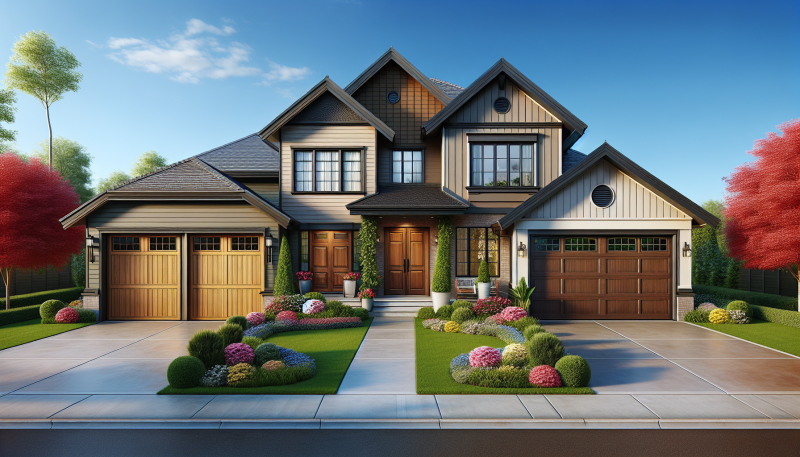
Garage Door Styles That Boost Home Value
The garage door is often the first thing buyers notice when approaching your home. Choosing the right style can significantly impact curb appeal and resale value,
especially when the door matches your home’s architectural style and neighborhood standards.
For local help across New Jersey, explore our
service areas or view real
before-and-after replacements.
Which garage door styles boost home value the most?
Answer: Raised-panel, carriage-house, contemporary, and glass styles often lift curb appeal fastest; choose what fits your façade and neighborhood.
Not all garage door styles deliver equal value. The most effective choice depends on your home’s architecture, local market preferences,
and the door’s condition and installation quality.
The highest-impact styles typically include:
- Raised-panel doors for traditional and colonial homes—versatile, timeless, and widely appealing to buyers
- Carriage-house doors for craftsman and cottage-style homes—add charm without sacrificing modern convenience
- Contemporary doors with clean lines and glass panels for modern architecture—signal updated, well-maintained property
- Insulated steel or composite doors that combine appearance with energy efficiency—practical appeal in all climates
The key is alignment. A sleek glass door on a Victorian home can actually hurt value by creating visual discord.
Similarly, an ornate carriage-house door on a minimalist modern home looks out of place.
The best ROI comes from doors that enhance—not fight—your home’s existing character.
If you want professional guidance on options and pricing, start with
garage door installation or browse
custom garage doors in NJ.
What ROI do garage door replacements typically deliver?
Answer: Garage door replacement commonly recoups 90 to 95 percent of cost at resale when materials and installation quality are high and style matches the home.
Garage door replacement consistently ranks among the highest-ROI home improvements. Homeowners can expect to recover most of their investment
when the door is installed properly and suits the property.
What drives ROI:
- Material quality—steel and composite doors hold up better than wood in harsh weather, reducing maintenance concerns for buyers
- Insulation value—insulated doors appeal to energy-conscious buyers and improve comfort in attached garages
- Professional installation—poorly installed doors show visible gaps, operate noisily, and fail inspections
- Style appropriateness—doors that fit the neighborhood and home architecture deliver higher returns than mismatched upgrades
Returns vary by region and price point. In competitive markets where curb appeal matters, a new garage door can be the difference between a quick sale
and lingering inventory.
If your door has functional issues, you may get more ROI by fixing problems first:
garage door repair in NJ and
safety inspections help prevent surprises during showings.
Which garage door materials hold up best in New Jersey weather?
Answer: In NJ weather swings, insulated steel or quality vinyl composite resists rust and dents better than wood while still looking premium.
New Jersey’s climate presents specific challenges: freezing winters, humid summers, coastal salt exposure in some areas,
and frequent temperature swings that expand and contract materials. Not all garage door materials handle these conditions equally.
Material performance in NJ climate:
- Insulated steel—top choice for durability and low maintenance; handles temperature extremes without warping
- Vinyl composite—excellent moisture resistance; won’t crack or peel; available in wood-grain finishes
- Aluminum—lightweight and rust-proof; can dent more easily than steel but ideal for some coastal areas
- Wood—beautiful but high-maintenance; requires regular sealing and painting; prone to warping in humidity unless using cedar/redwood
For most NJ homeowners, insulated steel or vinyl composite offers the best balance of appearance, durability, and minimal upkeep.
These materials maintain curb appeal through harsh winters and humid summers without constant refinishing.
Looking for a repair-first approach? These service pages can help:
panel replacement and
tune-ups & maintenance.
What’s the difference between raised-panel and carriage-house doors?
Answer: Raised-panel doors are classic and versatile; carriage-house doors mimic barn-door styling with decorative hardware while operating overhead.
These two styles represent different design philosophies but both can add value when matched to the right home.
Raised-panel doors work with nearly any architectural style and appeal to the widest range of buyers.
Carriage-house doors evoke the look of old swing-out barn doors but operate on modern overhead tracks, often with decorative hardware and window layouts.
The key difference in value impact: raised-panel doors are universally acceptable and rarely hurt resale,
while carriage-house doors can significantly boost appeal on the right home but may feel out of place on minimalist architecture.
If you plan to change your door style, it helps to confirm hardware and operation are in good shape:
spring considerations and
opener repair.
Which homes benefit most from contemporary garage doors?
Answer: Modern architecture, mid-century homes, and new construction benefit most; clean lines and glass panels signal recent updates and design detail.
Contemporary garage doors feature minimalist design—often full-view glass framed in aluminum, smooth surfaces, and linear patterns.
They work best when they reinforce the home’s overall geometry and exterior materials.
Ideal applications:
- Modern homes with flat roofs, large windows, and geometric design
- Mid-century modern homes where period-appropriate updates increase authenticity
- Urban infill and new construction where contemporary styling differentiates the property
- Studios or workshops where natural light in the garage adds functionality
If the door feels loud or jerky, fix operation issues before upgrading style:
roller replacement and
sensor repair are common quick wins.
Are custom garage doors worth it for resale?
Answer: Custom doors add value when they solve fit or design needs and use durable materials; overly unique designs can reduce buyer appeal.
Custom garage doors make sense in specific situations but aren’t always worth the premium for resale purposes.
They add value when they solve non-standard openings, preserve historic authenticity, or match a high-end home’s design language.
When custom doors add value:
- Non-standard openings that can’t accommodate stock sizes without major structural changes
- Historic homes where matching original details increases authenticity
- High-end properties where a standard door looks out of place
- Unique design challenges (angled openings, extreme heights, side-by-side configurations)
When custom doors can hurt value:
- Highly personalized colors or patterns that narrow buyer appeal
- Exotic/high-maintenance materials that raise upkeep concerns
- Cases where a premium stock door achieves similar impact for less
Learn more about options here:
custom garage doors and
garage door services.
Do insulated garage doors increase home value?
Answer: Insulated doors can raise perceived value by improving comfort, noise control, and efficiency—especially for attached garages or rooms above.
Insulation matters most when the garage connects to living space or sits below occupied rooms.
In these cases, an insulated door reduces noise transfer, helps regulate temperature, and lowers energy costs.
Value drivers for insulated doors:
- Temperature control for attached garages that affect adjacent rooms
- Noise reduction in high-traffic or dense neighborhoods
- Added rigidity and durability
- Energy-efficiency appeal to modern buyers
If you want to pair insulation with reliable operation, these pages help:
opener installation and
maintenance tune-ups.
Do smart garage doors increase home value?
Answer: Smart openers and connected controls can boost buyer appeal by adding convenience and security, as long as the system is reliable and easy to use.
Smart technology—remote access, notifications, scheduling, and security integration—appeals to tech-savvy buyers.
It adds the most value when it feels seamless and dependable.
Value-adding smart features:
- Remote monitoring and control, plus alerts if left open
- Integration with home security systems and automatic lighting
- Battery backup for power outages
- Activity logs for families and service access
If your opener is outdated, start here:
opener repair or
new opener installation.
Garage Door Style Comparison: Value and Fit
Answer: Compare styles by buyer appeal, best architecture match, maintenance requirements, and climate suitability for New Jersey conditions.
| Style | Buyer Appeal | Best For | Maintenance | NJ Climate | Value Impact |
|---|---|---|---|---|---|
| Raised Panel | High | Traditional, Colonial, Ranch | Low | Excellent (steel/vinyl) | High |
| Carriage House | High (right home) | Craftsman, Cottage, Farmhouse | Medium | Good (needs sealing) | Medium-High |
| Contemporary | Medium (style-specific) | Modern, Mid-Century | Low (aluminum/glass) | Excellent | High (right buyer) |
| Wood Traditional | High (upscale) | Historic, Luxury Homes | High (annual) | Fair (needs sealing) | Medium |
| Steel Insulated | High | All styles, attached garages | Very Low | Excellent | High |
Want examples of what sells well locally? Browse
customer testimonials and our
garage door blog.
When should you replace versus repair a garage door before selling?
Answer: Replace when panels are dented or rusted, operation is loud or jerky, or the door looks outdated; repair for minor cosmetic or mechanical issues.
Sellers face a judgment call: invest in a full replacement or make targeted repairs.
The decision depends on the door’s age, condition, and how it compares to neighborhood standards.
Replace the door when:
- Visible damage (dents, rust spots, warped panels, faded paint)
- Operational problems (grinding, jerking, excessive noise, balance issues)
- Style mismatch compared to neighborhood updates
- Age beyond 15–20 years (often lacks insulation and safety features)
- Failed inspection (gaps, sensor failures, structural concerns)
Repair instead when:
- Minor cosmetic issues (scratches, weatherstripping, hardware updates)
- Isolated mechanical problems (one spring, sensor alignment, rollers)
- Door is relatively new (under ~10 years) with good structure
For urgent issues or a door that won’t close securely, see
24/7 emergency garage door repair.
How should homeowners maintain a garage door to protect value?
Answer: Annual inspection, lubrication, and safety checks prevent spring, track, and opener failures, helping preserve curb appeal and performance.
Regular maintenance extends door life and prevents the embarrassing scenario of a malfunctioning door during a buyer showing or inspection.
Essential maintenance tasks:
- Visual inspection: panels, weatherstripping, gaps
- Lubrication: hinges, rollers, springs (twice yearly)
- Balance test: door should stay at halfway position
- Safety sensor test: door should reverse when blocked
- Track cleaning: remove debris to prevent binding
For professional service, start with
garage door tune-ups
or book an
inspection.
What pre-sale garage door upgrades do NJ homeowners request most?
Answer: NJ sellers most often request full door replacement, window additions, opener upgrades, and cosmetic refreshes to improve curb appeal and buyer confidence.
Based on service data from residential properties in northern New Jersey over the past two years, certain upgrade patterns emerge when homeowners prepare to sell.
Most requested pre-sale services:
- Full door replacement: ~58% (most choose insulated steel in raised-panel or carriage-house styles)
- Window panel additions: 19% (commonly requested to improve curb appeal)
- Opener upgrades: 14% (quiet belt-drive or smart-enabled systems)
- Cosmetic refresh: 9% (paint, hardware, weatherstripping; usually on doors under ~8 years old)
Top issues found during pre-sale inspections:
- Malfunctioning safety sensors: 28%
- Broken/weak springs causing balance problems: 41%
- Gaps or missing weatherstripping allowing water infiltration: 31%
Typical timelines: standard two-car door replacement often takes 4–6 hours; complex custom installations can extend to 2–3 days.
If you’re planning improvements before listing, schedule service with buffer time.
Related services:
garage door specials and
contact us.

Leave a Reply